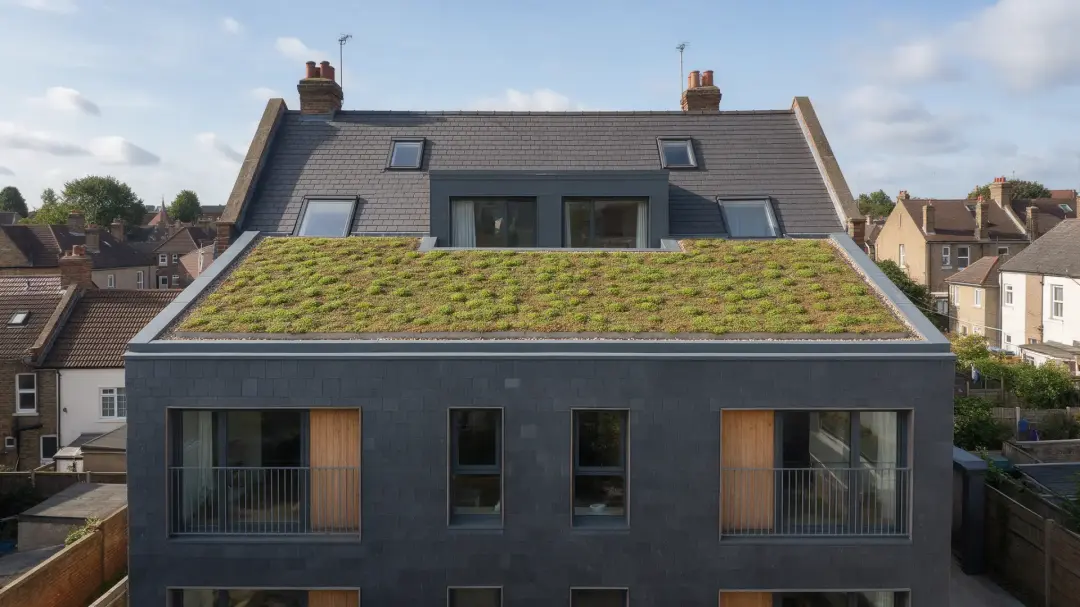
A green roof is a planted roof built above a protected waterproofing system. It is more than soil spread across a flat surface: its layers must support plants, manage rainwater and keep the building dry. This guide explains what goes into a living roof, how the parts work together and what to check before installing one.
What Makes a Roof “Green”?
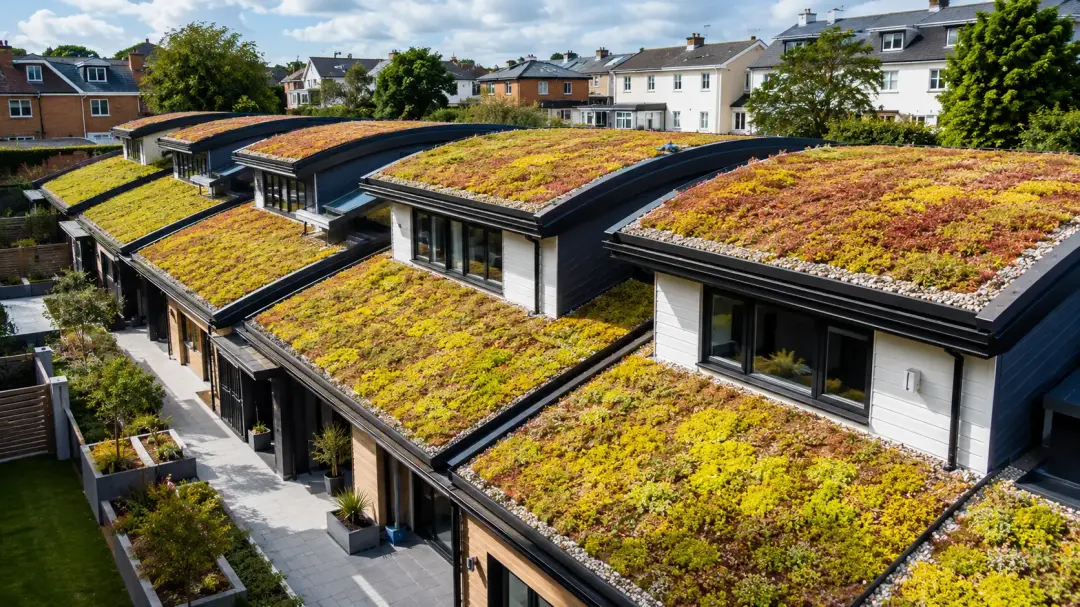
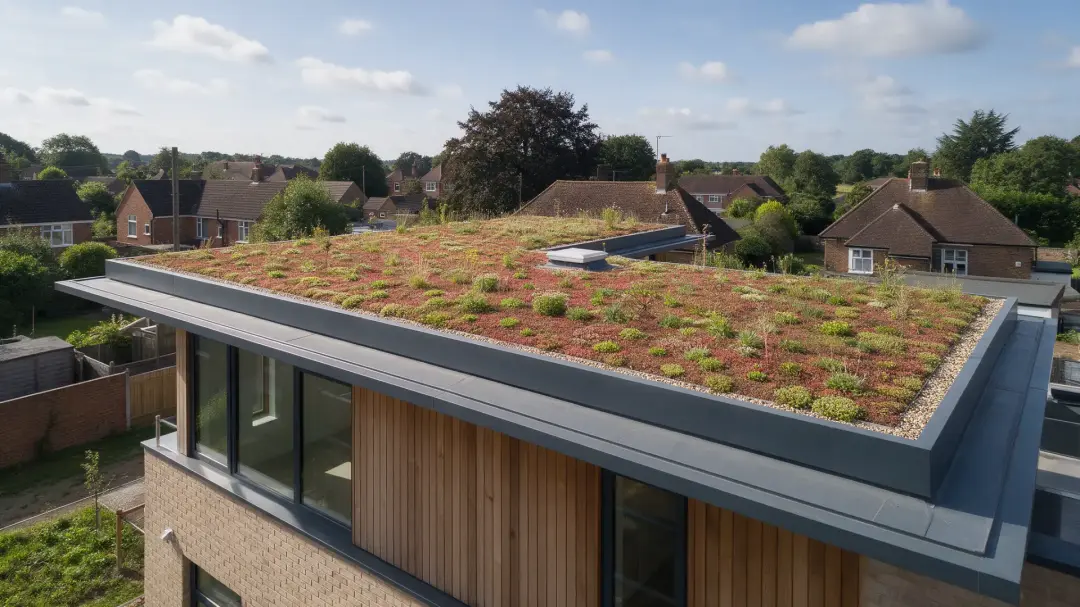
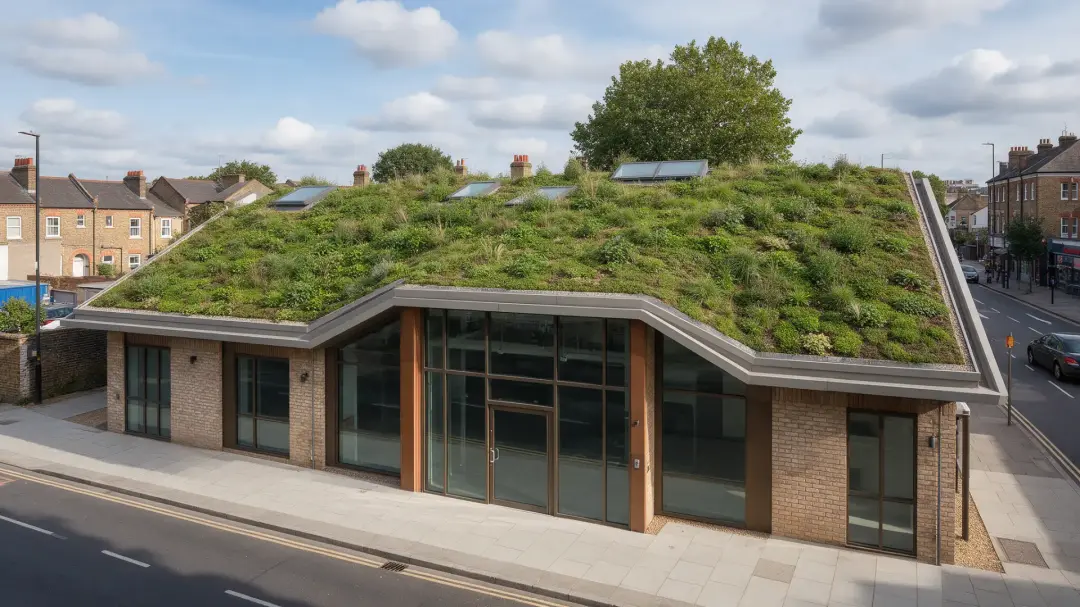
A green roof places vegetation and an engineered growing medium above the roof covering. It can be designed for sedum, wildflowers, grasses or a more garden-like mix. Many are built on flat or gently sloping roofs, including house extensions, garages and commercial buildings. The right planting depends on the structure, sun, wind, drainage, access and the owner's goals.
The plants are only the visible part. A continuous waterproof membrane still keeps water out of the building, while other layers protect it and support growth. Planting cannot make a defective roof watertight. The design should therefore begin with the roof's condition and load capacity, followed by a complete system specification rather than a plant choice alone.
Which Layers Sit Beneath the Plants?
From the building upwards, a typical build-up includes the structural deck, insulation where required, waterproofing, root-resistant protection, a drainage layer, filter fabric, growing medium and vegetation. Some products combine layers, while others use separate mats or boards. The exact order must follow the chosen system and the building's design.
The waterproofing blocks water from entering the property. Root protection prevents suitable plants from penetrating that barrier. Drainage stores some moisture but routes excess water to the outlets. Filter fabric helps stop fine growing-medium particles clogging the drainage layer. Specially specified substrate is generally lighter and more stable than garden topsoil. Each layer has a separate job; leaving one out can affect the whole roof.
How Does a Green Roof Handle Rain?
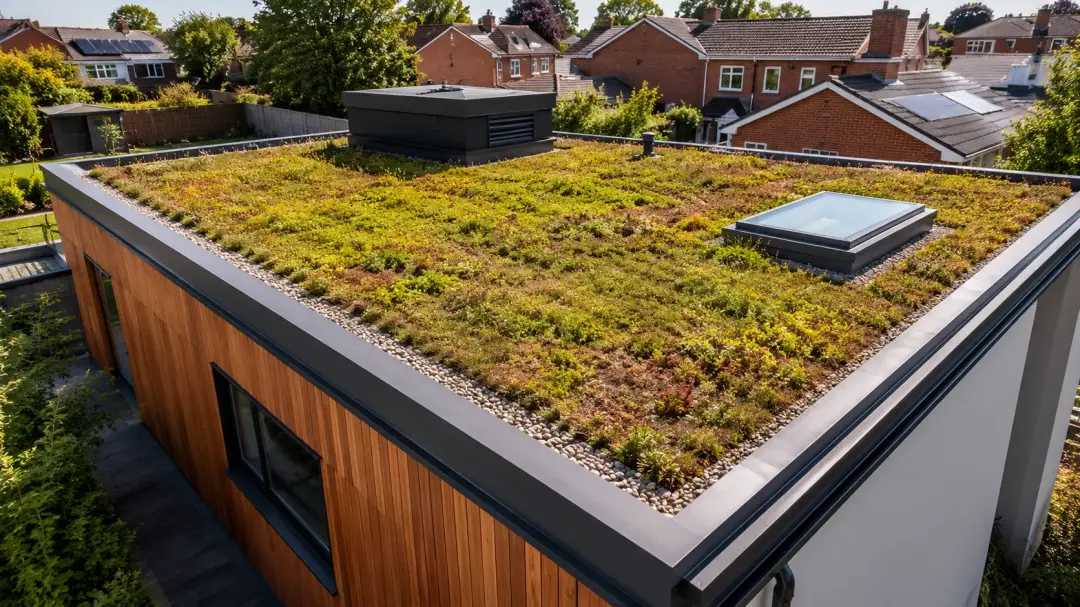
Rain lands on leaves and enters the growing medium. Some stays there until plants use it or it evaporates. Once storage fills, the remaining water travels through the drainage layer and out through normal roof outlets. A green roof can slow and reduce runoff, but it does not replace correctly sized drainage.
A 2025 study of 30 green roofs in Sweden followed 84 rain events. During the monitored snow-free periods, the roofs retained more than half of 409 mm of cumulative precipitation. That is an observed result, not a promise for a UK property: a saturated roof or a heavy storm can produce much more runoff.
Extensive, Intensive and Biodiverse Roofs
An extensive roof generally uses a relatively shallow growing layer and low-growing plants such as sedum. It is often a practical option for a small roof, although it still needs maintenance and safe access. An intensive roof has deeper growing medium and may support larger plants or usable garden space. Its extra weight, watering and upkeep make structural design especially important.
A biodiverse roof may combine varying substrate depths, flowering species and habitat features. There is no planting mix that maximises every outcome. In the 2025 rainfall study, the treatment with the greatest species richness did not retain the most water. A design intended mainly for wildlife may reasonably differ from one intended mainly for runoff control. Agree the principal aim before selecting a system.
What Should Be Checked Before Installation?
A green roof adds weight, especially when the growing medium is fully saturated. The assessment also needs to include people, equipment, snow and any features placed on the roof. A competent professional should review structural capacity, roof falls, outlet positions, waterproofing, edge details and access for future maintenance. An older membrane may need repair or replacement before it is covered.
The Green Roof Organisation's UK code of practice, available in its 2026 downloads, covers design and upkeep. It notes that irrigation is commonly required for the first 6–8 weeks of establishment, depending on natural rainfall. That gives owners a planning figure, although the actual need varies with planting, weather and the time of year.
How Do Roof Plants Survive?
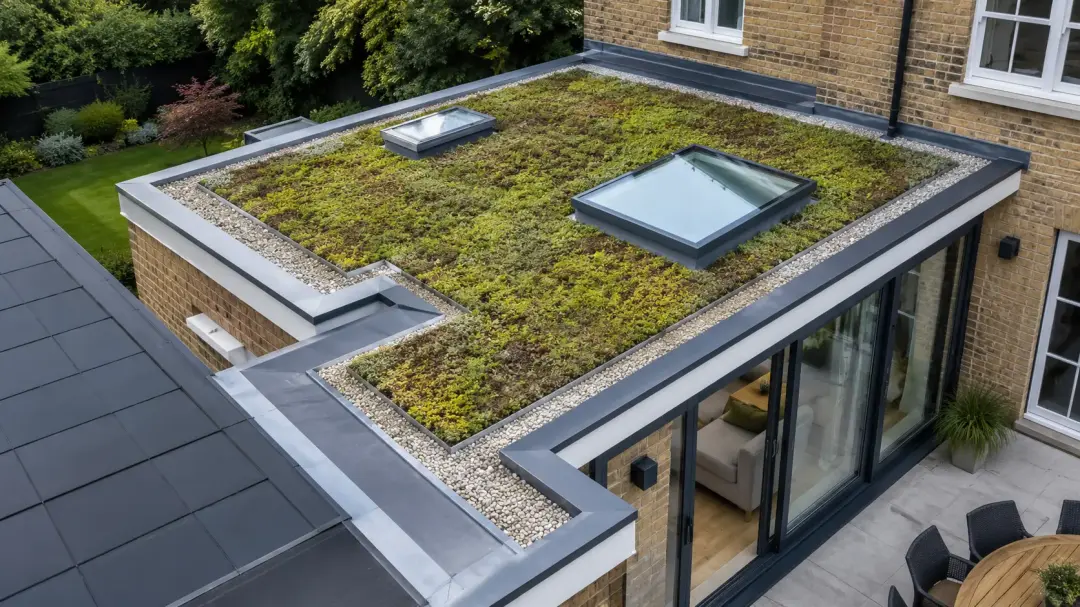
Plants on a roof face greater exposure to wind, sun and drying than those in a sheltered garden. The substrate must hold enough water for the planting while allowing surplus rain to drain. Sedum is often chosen for shallow systems because it tolerates dry periods. Wildflowers and grasses may need deeper medium or more watering, especially while they establish.
A 2024 paper on an 11-year Toronto trial found that sedum maintained cover more consistently after irrigation stopped, while many forbs and grasses declined. This does not make sedum the only suitable choice. It shows why the planting and watering plan must match the roof's conditions and long-term maintenance budget.
How Is the Roof Kept in Good Condition?
Living roofs are not maintenance-free. Outlets and inspection chambers need to stay clear so excess water can leave. Planned visits should check plant cover, unwanted growth, gravel margins, flashings and exposed waterproofing. After severe weather, a safe inspection can find displaced material or blocked drainage before either becomes a bigger problem.
The installer should provide a maintenance plan identifying access routes, inspection points and any watering needs. Keep records of the waterproofing system and later works. New fixings, sharp tools and unprotected foot traffic can damage layers hidden beneath the plants. Roof-level work needs the right training and safety arrangements, particularly where edges or rooflights create a fall risk.
Does a Green Roof Insulate the Building?
Planting can shade a roof and change how much heat reaches its surface. Moist vegetation can also cool through evaporation. However, those effects vary with the weather, planting and insulation already present. A green roof should not be used as a substitute for the thermal insulation specified for the building.
For a house extension, the thermal design should be assessed as part of the entire roof build-up. The installer should explain where insulation, vapour control and waterproofing sit and how condensation is managed. A well-insulated room may see a smaller indoor temperature change than an uninsulated roof, even if the planted surface itself feels cooler.
Is a Green Roof Right for Your Property?
The answer depends on the building and what you value most: appearance, habitat, runoff management or usable outdoor space. A small extension might suit a lightweight extensive system. An accessible roof garden needs a more detailed structural, safety and maintenance plan. Performance also changes with substrate depth, climate and the underlying roof's condition.
A site-specific survey can establish what the structure will carry and how water will leave. Ask for a proposal that explains waterproofing, planting, access and ongoing costs together. It should also say how the membrane and outlets will be inspected after the plants have established. This gives a clearer basis for comparing options than a headline benefit alone.
If you are considering a living roof in Croydon or Streatham, Excellent Building & Roofing can discuss the building, waterproofing and planting options. See our green roof installers service page, then get in touch for a site-specific conversation.