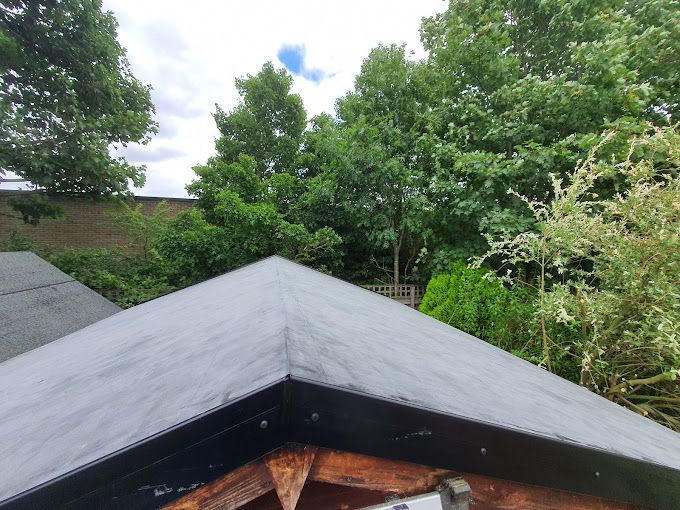
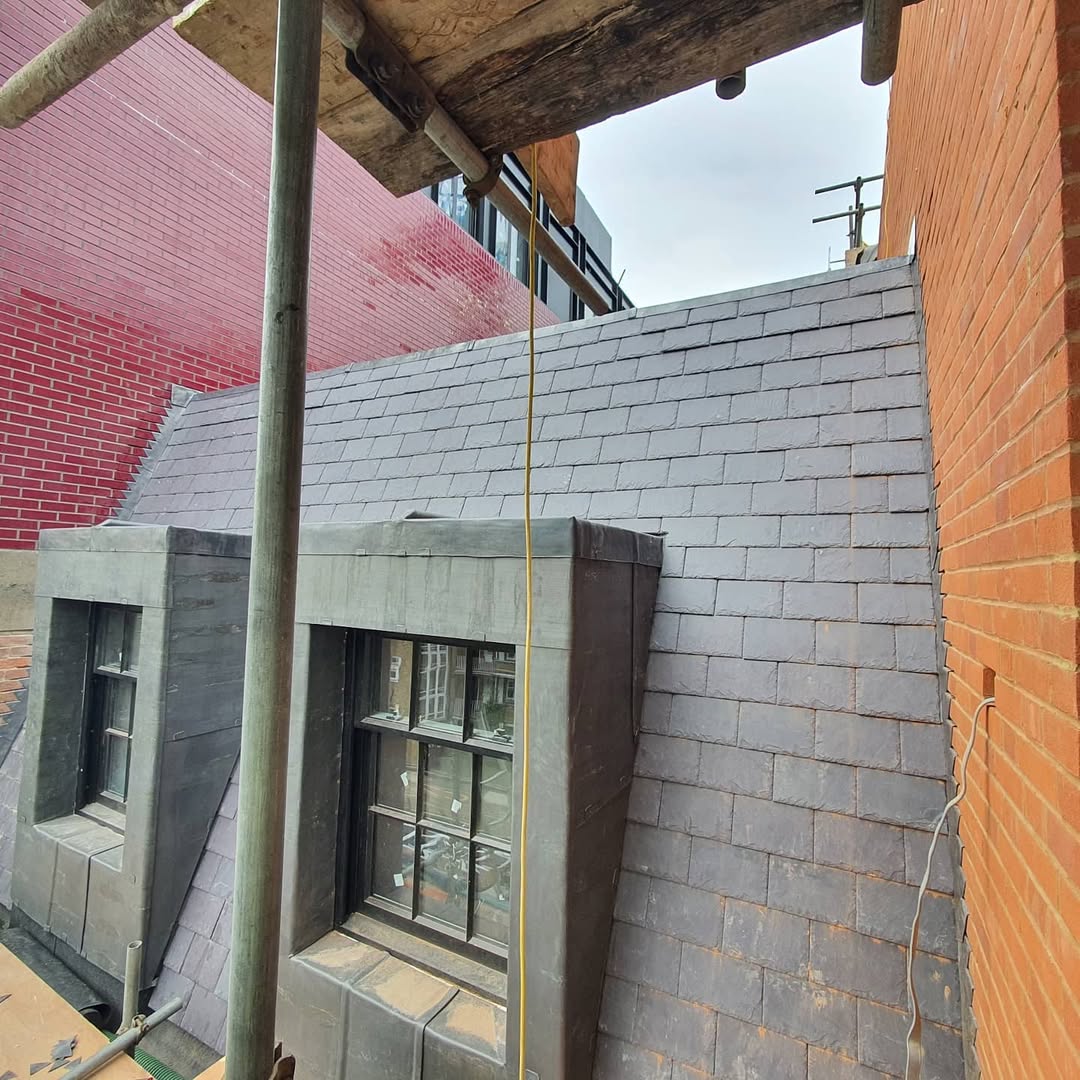
The main warning signs of a roof leak are new ceiling stains, damp roof timbers, damaged coverings and water appearing after rain. A drip is often a late symptom: moisture may already have travelled through insulation or along a rafter. For homes in Mitcham, finding the entry point matters more than simply covering the mark indoors.
Ceiling stains that change after rainfall
Look for yellow or brown rings, bubbling paint and plaster that darkens following wet weather. Photograph the mark with the date, then compare its edges after the next rainfall. An expanding stain suggests an active moisture source. An unchanged mark may be historic, although appearance alone cannot confirm that a roof is watertight.
The entry point can be several metres away. Water follows roof slopes, timbers and the underside of membranes before dropping onto a ceiling. A stain beside a chimney or rooflight is a useful clue, but sealing directly above it without tracing the route can leave the real defect untouched.
What a safe loft check can reveal
From a properly boarded, safely accessible loft area, look for water tracks on rafters, wet patches on the underlay and insulation that has become matted or locally discoloured. Daylight through an unexpected gap may indicate a displaced covering. Do not step between joists, disturb electrical cables or enter a loft with a damaged ceiling or unsafe access.
A wet patch can matter even when no water reaches the room below. Insulation may hold moisture and conceal the leak for a time. Tell the roofer which slope is affected, whether the problem happens only in wind-driven rain and whether any roof work took place recently.
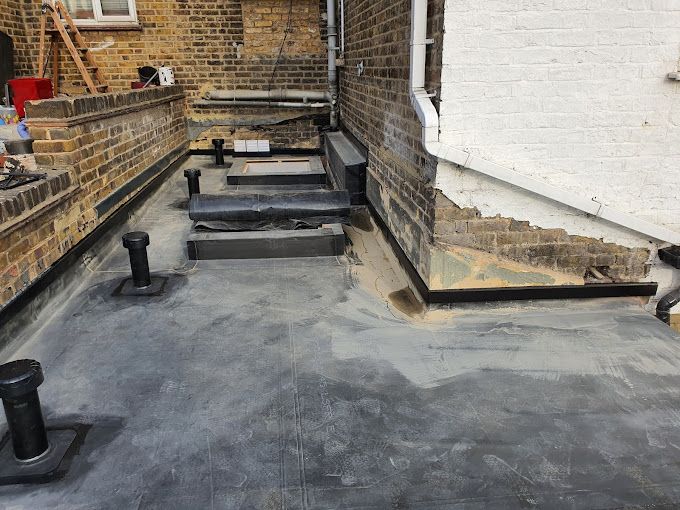
Missing tiles and failed roof junctions
Use binoculars from ground level to check for slipped tiles, broken slates, displaced ridge pieces and flashing lifting away from masonry. Valleys collect water from adjoining slopes, so debris or damage there can affect more than one room. Around chimneys, look for gaps at the flashing rather than assuming the tiles are responsible.
The SPAB guidance on rainwater penetration explains that even a slipped tile or a leaf-filled valley gutter can cause substantial damage. This does not mean every mossy tile needs replacement. The inspection should identify a defect and explain how it lets water pass.
A leak or condensation?
Condensation often appears as widespread droplets on cold roof surfaces during colder weather. A roof leak is more likely to produce a local track linked to rain, but both can occur together. Plumbing leaks, an overflowing tank and poorly routed extraction ducts can also wet a loft. Timing and location narrow the possibilities; they do not provide a diagnosis on their own.
A roofer should consider ventilation, insulation and the roof covering together. Sealant will not solve moisture generated indoors, while extra ventilation cannot repair torn underlay or defective flashing. Keep notes of the weather conditions that accompany each new patch.
Why repeated wet weather exposes small faults
The Met Office State of the UK Climate 2025 report, published in July 2026, says very wet October-to-March months with twice the 1961–1990 average rainfall have approximately doubled in frequency in 2016–2025 compared with that earlier period. This is a UK climate comparison, not a prediction for an individual street.
The practical lesson is to investigate repeat symptoms before a dramatic storm. A roof may cope with light rain but leak when a valley carries more water or wind drives rain beneath a damaged junction.
Symptoms that need urgent attention
A bulging ceiling, rapidly spreading water, sagging roof timbers or water near lights needs prompt professional attention. Keep people away from the affected area and avoid touching wet switches or fittings. Do not puncture a ceiling or climb onto a wet roof. Electrical or structural concerns need the appropriate qualified professional alongside a roofer.
Record visible damage from a safe position.
Move possessions only where access remains safe.
Ask whether temporary protection and permanent repair are separate stages.
Request photographs showing the source and completed work.
Summary
Changing stains, wet loft materials and displaced roof components deserve investigation. A sound repair follows the water path and distinguishes roof defects from condensation or plumbing problems.
If these symptoms have appeared at your property, Excellent Building & Roofing can discuss the affected roof and the next inspection step. Use the service page below for roof leak repair enquiries in Mitcham.