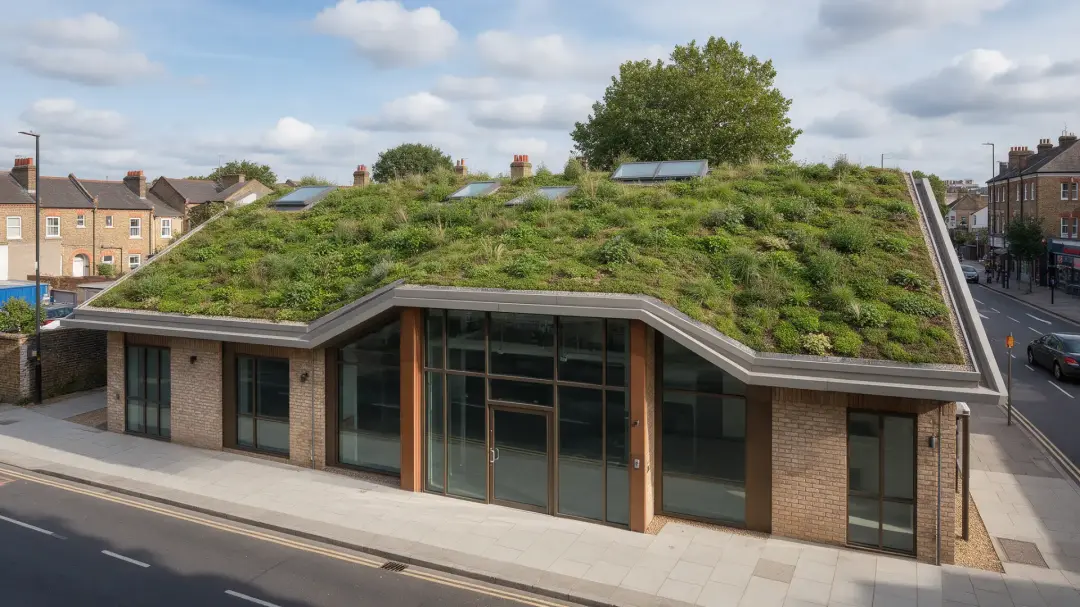

Choose gutters by the amount of rainwater they must carry, the position of the outlets and the support available at the roof edge. Colour and profile come after those checks. A larger-looking gutter is not automatically a better system, especially if its downpipe or discharge route is the bottleneck. Homes in Streatham need a specification suited to their roof, not a standard size chosen by habit.
Start with the roof area and geometry
Ask the installer which slopes drain to each run. Valleys can concentrate flow into a short section, while a new extension may add water to an existing outlet. Pitch matters because drainage calculations use effective roof area rather than simply the footprint visible on a plan.
Historic England’s rainwater sizing guidance explains the need to consider effective area and rainfall intensity together. Its advice also highlights local conditions and the consequences of overflow. Ask for the basis of the sizing, particularly on complicated roofs or where escaped water could enter the building.
Compare tested capacity, not width alone
Manufacturer figures checked in November 2026 illustrate why profile matters. At a 1:600 fall with an end outlet, Brett Martin lists 1.31 litres per second for its 112mm Roundstyle gutter and 2.31 litres per second for its 115mm Deepstyle. A small width difference accompanies a substantial capacity difference because the cross-sections differ.
These are figures for those named systems and test arrangements, not universal ratings for all similar gutters. Outlets, bends and layout affect performance. Have the installer select from the chosen manufacturer’s tables instead of applying another brand’s figure to a visually similar product.
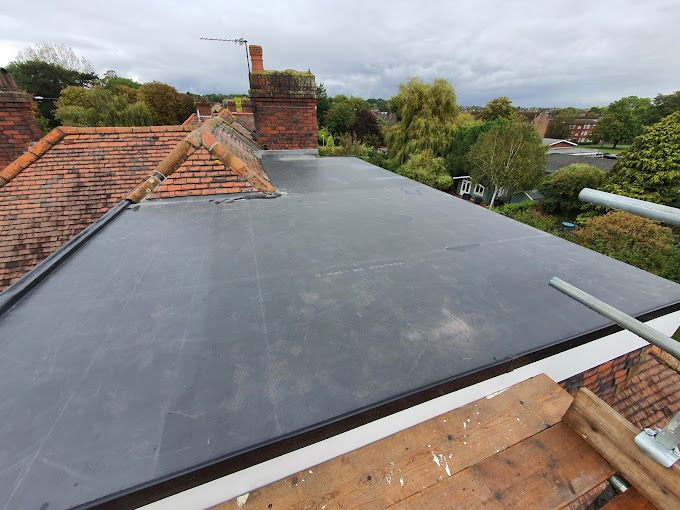
Outlet positions can change the result
Water has farther to travel when a long run drains from one end. A central outlet or additional downpipe may improve the arrangement, but the solution must include somewhere suitable for that water to go. A higher-capacity gutter cannot cure a blocked underground drain.
Discuss downpipe routes before ordering. Check that pipe brackets can be fixed securely and that the outlet will not discharge onto a doorway, path or neighbouring wall. Where a water butt is included, allow for its overflow when full. Rainwater storage is useful only when the drainage route still functions during sustained rainfall.
Select materials for maintenance and appearance
uPVC offers a lightweight option in a range of profiles. Aluminium can suit long runs and particular architectural finishes, while cast iron may be appropriate where the original appearance matters. Compare the whole installed system: brackets, fixings, joints, coating maintenance and replacement parts.
As a product-specific example, Marley Alutec’s Traditional Half Round data sheet states a functional life expectancy of more than 50 years with minimal maintenance. That is a manufacturer’s expectation for its system, not a guarantee for every aluminium gutter. The sheet still calls for periodic cleaning and checking fixings.
Make sure the fascia can support it
Gutters are attached to a structure, not just a decorative edge. Decayed timber, unsuitable cover boards or poorly secured brackets can undermine a new installation. Ask whether the fascia is sound enough for the proposed system and whether heavier materials require a different support detail.
Mixing old and new fittings also needs care. Profiles that appear similar may have different seal dimensions and movement allowances. Use a consistent system or an approved compatible connection. A quotation should identify the brand and profile, making future repairs easier than relying on a generic description such as black plastic guttering.
Ask how it will be maintained
Can leaves and silt be removed without dismantling inaccessible joints?
Are outlets reachable using a safe maintenance method?
Will nearby trees require more frequent clearance?
Are seals and fittings readily available?
Will the installer check drainage after fitting?
Leaf guards can help in the right location but still need inspection. Choose the system you can maintain over time, and request a written record of its profile, outlet arrangement and care instructions.
Summary
The right gutter balances effective roof area, verified flow capacity, suitable outlets, sound support and manageable upkeep. Compare complete systems and ask for the calculation behind the recommendation.
If new guttering also raises questions about the fascia at your Streatham property, Excellent Building & Roofing can discuss both parts of the roofline. Follow the service link below to enquire.