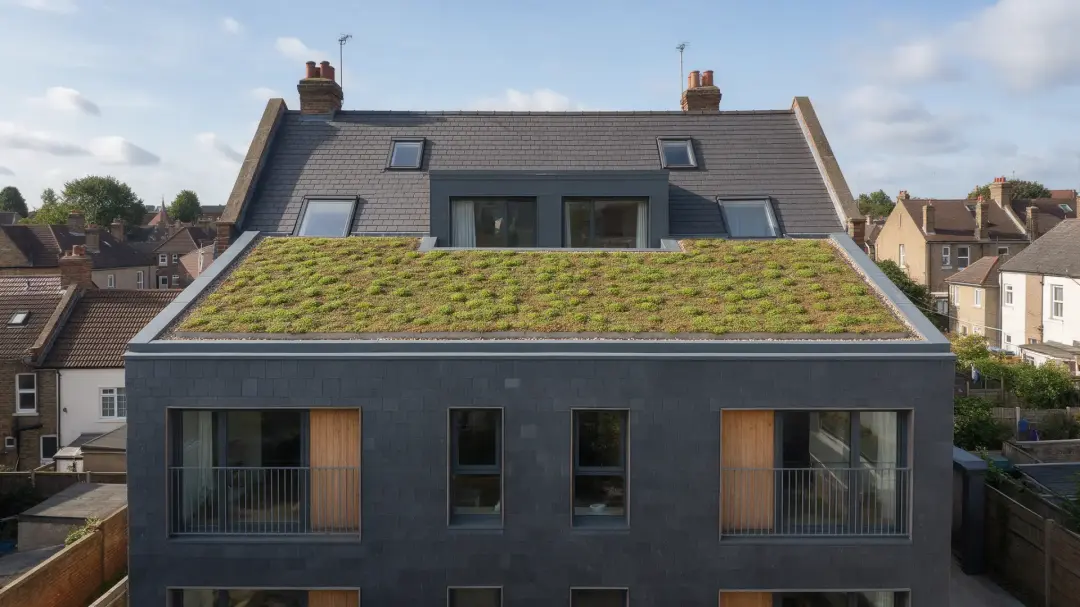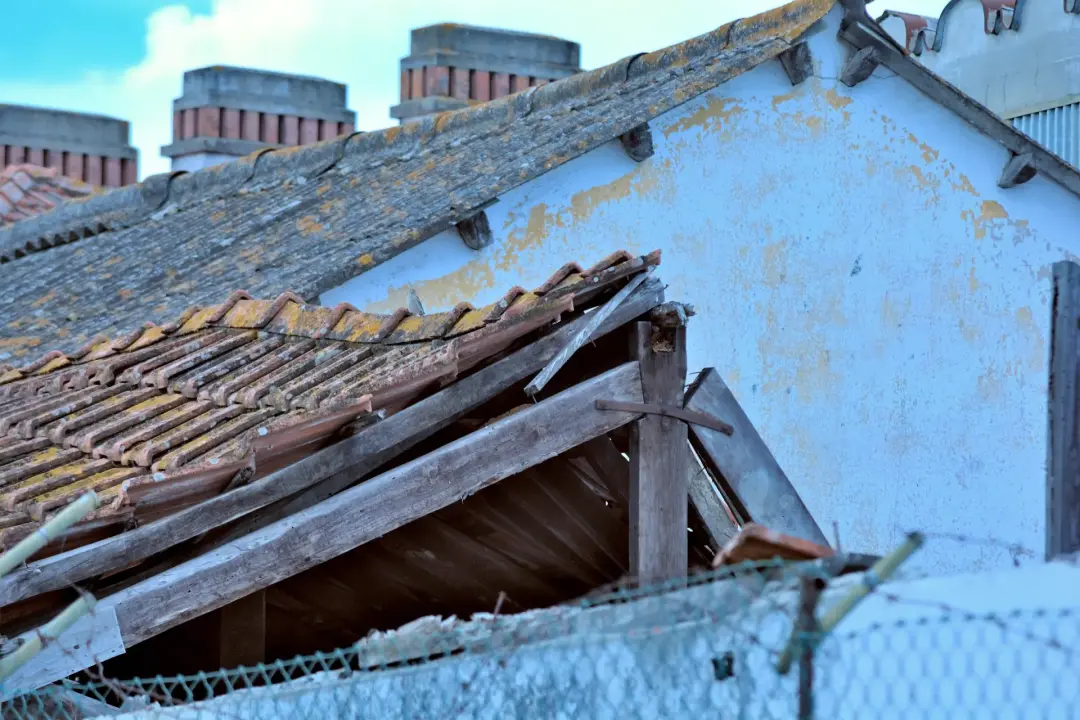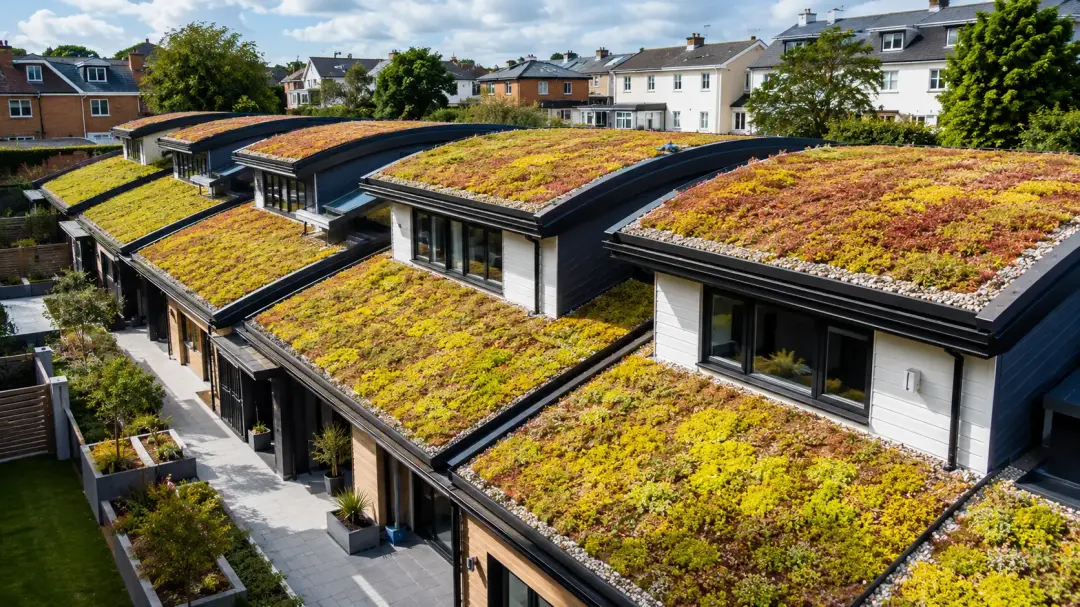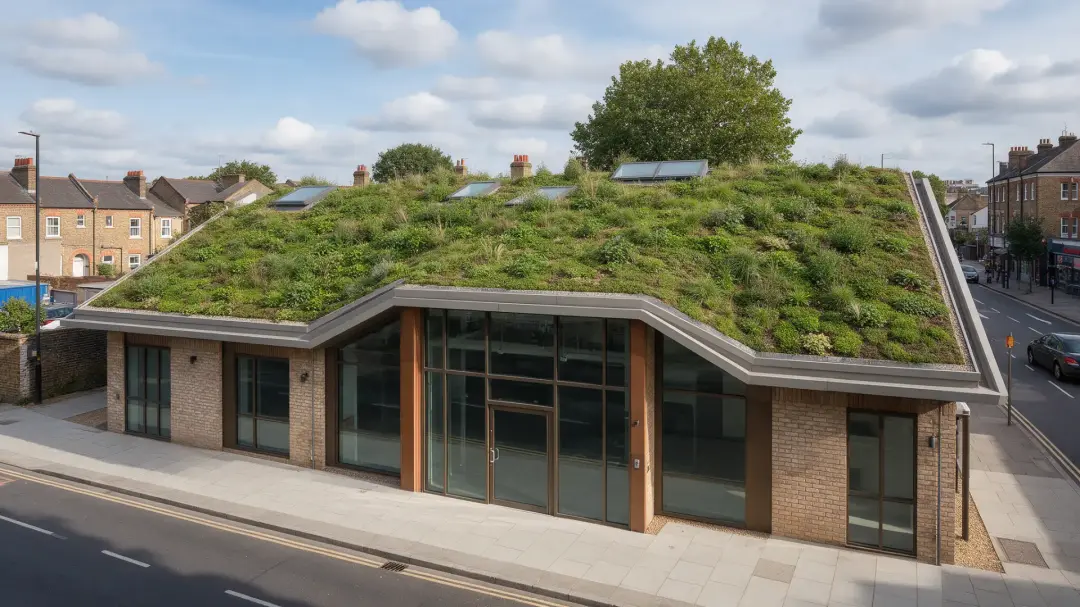
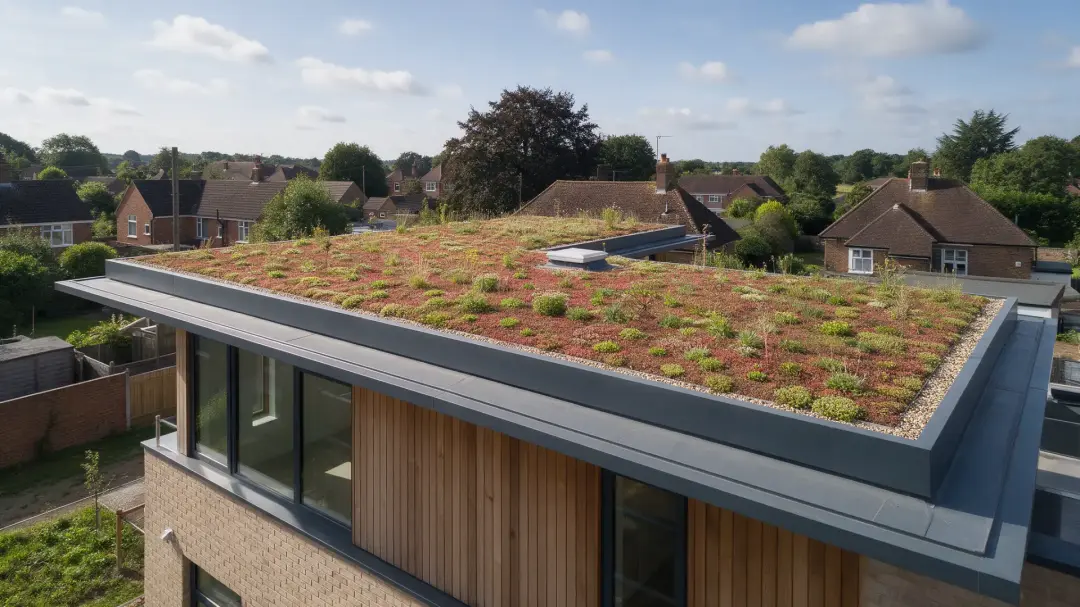
A green roof does not have a single expiry date. Its plants, growing layers and waterproofing can age at different rates, and one part may be repairable without replacing the entire system. A useful lifespan estimate starts with the membrane specification, roof details and a realistic plan for maintenance.
What Lifespan Should You Plan For?
A US General Services Administration study used 40 years as the average life expectancy for a green roof, compared with 17 years for a black roof. These are older US planning estimates, not a guarantee for a particular UK installation. Product choice, climate, workmanship, inspection and maintenance can all lead to different outcomes.
The waterproof membrane is often the limiting component. Plants may need local replacement after drought or damage even while the waterproofing continues to perform. Equally, healthy-looking vegetation cannot prove that a hidden membrane is sound. Ask the installer for the expected service life and warranty of each component, including what conditions are attached to those warranties.
Why Does Waterproofing Matter Most?
The waterproof layer prevents rain from entering the building. Vegetation and substrate can shield it from ultraviolet light and moderate some temperature swings, reducing exposure that contributes to wear. That protection only helps where the membrane, seams, upstands and outlets are installed and detailed correctly. The system also needs suitable root resistance for its planting.
Water can travel between layers before a leak appears indoors, so locating a defect may be harder than on an exposed roof. This is why the membrane should be sound and tested before it is covered. Keep product details, layout drawings and records of later repairs. Those documents will help a future specialist identify the system without opening more of the roof than necessary.
Do the Plants Last as Long as the Roof?
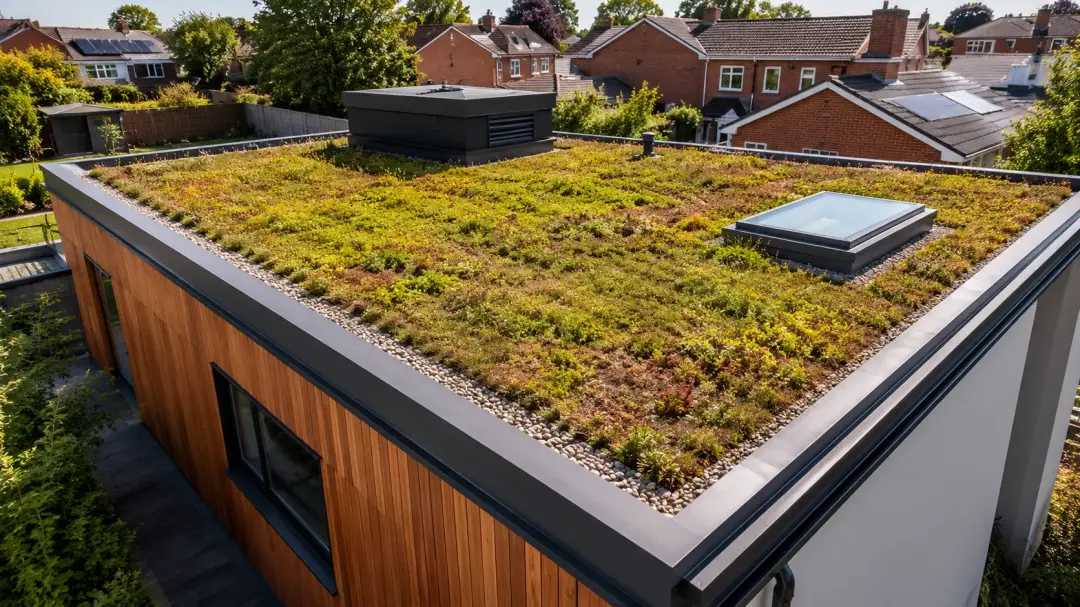
A living roof changes over time. Individual plants may die back seasonally, spread into gaps or be replaced by other species. This does not necessarily mean the roof has failed. Extensive bare patches, unwanted woody growth or widespread dieback do need attention because they can change the roof's appearance and intended function.
A 2024 paper on an 11-year Toronto trial found that sedum maintained cover more consistently after irrigation stopped, while many forbs and grasses declined. That finding supports choosing planting and watering for the site. It is not a fixed lifespan for all sedum or wildflower roofs.
What Can Shorten a Green Roof's Life?
Blocked outlets, poor roof falls, damaged waterproofing and unsuitable plants can all cause trouble. Displaced edge materials may expose vulnerable details, while tree seedlings can develop stronger roots than the intended planting. Later construction work is another risk: fixings, sharp tools or heavy equipment can puncture layers that are difficult to inspect once vegetation has grown over them.
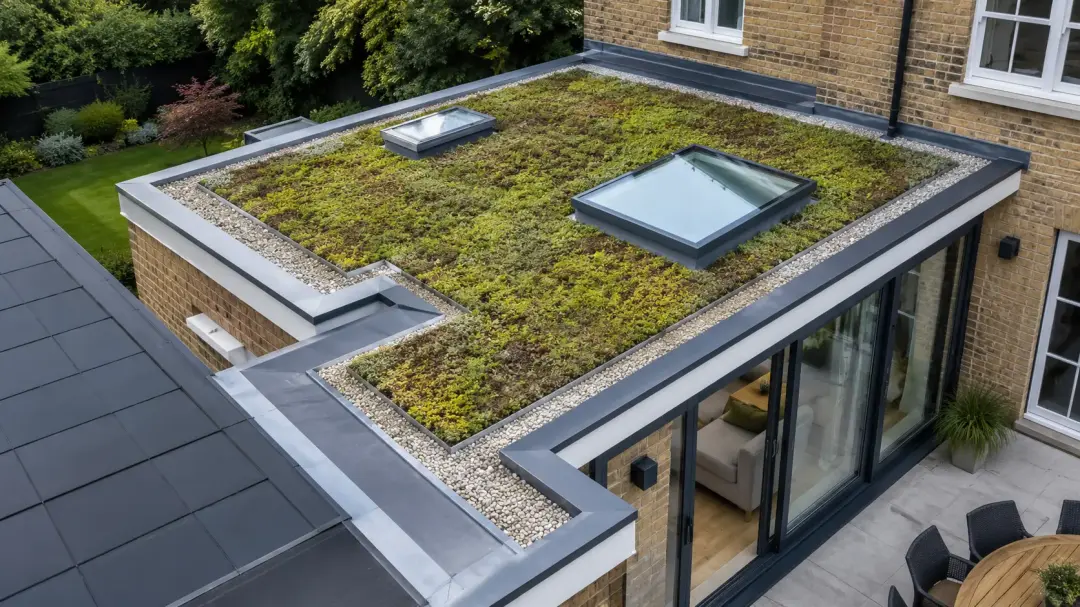
Check for standing water where it should drain, vegetation growing in gravel margins and blocked inspection chambers. Pay attention to rooflights, parapets and service penetrations, where several materials meet. A small defect can often be repaired, but ignoring it may allow water to reach insulation or the roof deck. Do not lift large sections of planting without a method for restoring the system correctly.
Does Performance Decline with Age?
A 2024 field study assessed seven years of monitoring from a 12-year-old green roof in a moist subtropical climate. It found average retention of 82% across rainfall events and no obvious decline in retention during the period analysed. This is evidence that performance can persist, although one roof in another climate cannot predict a UK roof's lifespan.
Older roofs may need changes to planting or irrigation as conditions shift. Assess the outcomes originally specified: water tightness, clear drainage, healthy cover and any rainfall or biodiversity goals. A roof can remain useful even when its plant mix changes. A single dry season or storm also does not tell the whole story; records across several inspections are more informative.
Maintenance That Helps It Last
Plan visits to clear drains, check inspection chambers, remove unwanted seedlings and review plant cover. Inspect vulnerable edges and exposed details, especially after severe weather when access is safe. Avoid storing heavy objects on the roof or allowing unprotected foot traffic across vegetation and waterproofing.
The Green Roof Organisation's UK code of practice, available in its 2026 downloads, says green roofs require maintenance. It notes that initial irrigation commonly lasts 6–8 weeks, depending on rainfall, and recommends specialist care. Agree who is responsible for the work and keep dated records. That makes gradual changes easier to spot before small faults become expensive repairs.
When Should You Repair or Replace?
A local leak around a joint or penetration may be repairable once its source is found. Damaged planting can often be replaced without renewing waterproofing. More widespread membrane failure, repeated leaks or a roof approaching the end of its specified service life may call for refurbishment or full replacement. The decision should follow an inspection, not the age of the visible plants alone.
If an existing flat roof is old or leaking, ask whether the waterproofing should be renewed before a green roof is installed. Covering a weak membrane can make later access costly. A clear quotation should state what will be kept, what will be replaced and how the finished system will be tested. It should also explain how planted areas will be restored after any repair.
How Can You Get a Useful Estimate?
Ask for the membrane specification, warranty terms, saturated load calculation, drainage layout and maintenance schedule. Clarify whether each warranty covers waterproofing, vegetation or both, and whether inspections are required to keep it valid. The design should allow access to outlets and vulnerable details without removing large areas of planting.
A green roof can be a long-lived building feature when it begins with a sound structure and waterproofing and receives appropriate care. For a particular property, a site survey and a system proposal give a more reliable answer than a generic lifespan figure. The proposal should set out expected maintenance and possible replacement points so future costs are understood from the start.
If you are planning a new living roof or assessing an older one in Croydon or Streatham, Excellent Building & Roofing can discuss the roof's waterproofing, drainage and planting. Read our green roof Croydon service page, then get in touch about your property.