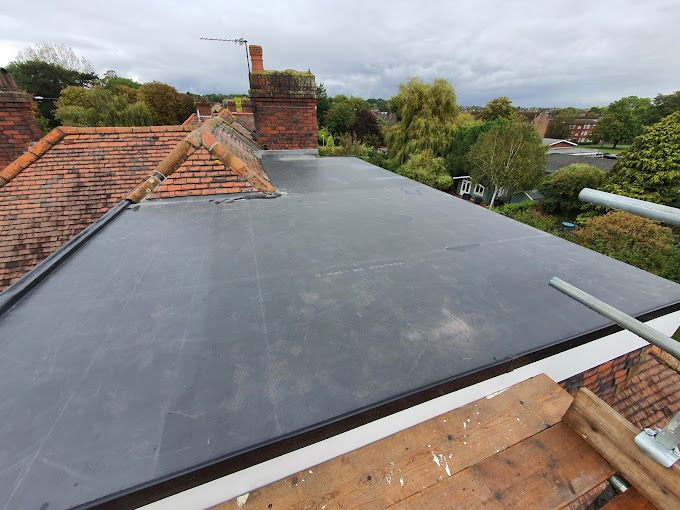

Common flat roof problems include leaking junctions, open seams, punctures, deteriorated surface layers and drainage faults. The right repair depends on the waterproofing system and the condition underneath it. For a property in Croydon, begin with a diagnosis of the defect rather than applying a general coating over every suspicious mark.
Leaks around edges, pipes and rooflights
Waterproofing has to change direction where it meets a wall, kerb or pipe. These junctions are vulnerable when flashing becomes loose, a termination opens or movement separates the materials. Water can then travel beneath the covering before appearing inside, so an indoor drip does not reliably identify the failed detail.
Ask the roofer to inspect upstands, edge trims and penetrations as well as the main field of the roof. A repair should restore the intended junction and use materials compatible with the existing membrane. Covering an open edge with an unrelated sealant may provide brief relief without addressing movement or an insecure termination.
Open seams and accidental punctures
Debris, later building work and unprotected foot traffic can damage a membrane. Some seams may also lose their bond or develop defects at intersections. A small puncture in otherwise sound waterproofing may be repairable, but the surrounding area needs inspection for moisture and further damage.
IKO’s guidance on single-ply repairs describes repairs using compatible materials and the appropriate preparation and joining method. Do not assume that one rubber, plastic or liquid repair product works on every covering. Identifying the installed system is part of the job, particularly where old patches obscure the surface.

Blisters, ridges and surface deterioration
A raised blister or ridge can have several causes, including trapped air or moisture and movement within the build-up. A blister is not automatically an active leak, but its location, size and condition need assessing. Cutting it open without a repair plan can turn an intact surface into a water entry point.
Mineral loss, cracking, exposed reinforcement or widespread splits may indicate more general deterioration. The NFRC maintenance checklist calls for examining surface condition, upstands, trims, drainage and signs of underlying failure. A collection of defects needs a whole-roof assessment rather than a sequence of unrelated patches.
Blocked outlets and local low spots
Leaves and silt can restrict an outlet, while a low area may retain water even when the drain is clear. These are different defects. Clearing the outlet restores the designed route; correcting a low spot may require changes to the deck or roof falls. The covering alone cannot redirect water uphill.
Ask the inspector to distinguish a drainage obstruction from deformation of the supporting construction. Sagging, unusually deep water or a soft-feeling deck requires prompt assessment. Do not walk onto a roof to test its strength, and do not drill an outlet through the waterproofing as an improvised drainage measure.
Wet insulation and a weakened deck
A surface repair can stop new water entering without making already wet layers sound. Depending on the build-up, investigation may involve moisture testing and carefully controlled opening-up. The proposal should explain what evidence supports retaining existing insulation and decking.
Soft boards, repeated leaks and extensive trapped moisture can change the economics from local repair to refurbishment. Conversely, a sound dry roof with one defective junction does not automatically need complete replacement. Request the findings and compare the scope of each option, including how damaged material will be removed and the roof kept protected during work.
Plan maintenance around the installed system
Maintenance advice checked in November 2026 from Bauder calls for visits at least every six months and after major weather events for its roof solutions. That gives a practical two-visit annual baseline, while the actual system and guarantee may impose additional requirements.
Record the membrane type and previous repairs.
Keep outlets and discharge routes clear.
Check junctions after other trades have worked nearby.
Use designated access routes and suitable protection.
Retain dated photographs and maintenance records.
Do not add heavy planters, decking or equipment without checking the design. Maintenance access and amenity use are different loads and need different details.
Summary
Flat roof repairs should match the specific defect and waterproofing system. Assess junctions, seams, drainage and the hidden build-up together, and use maintenance records to catch changes early.
For a flat roof defect in Croydon, describe the leak or visible change to Excellent Building & Roofing. Follow the service link below to discuss inspection and repair options.