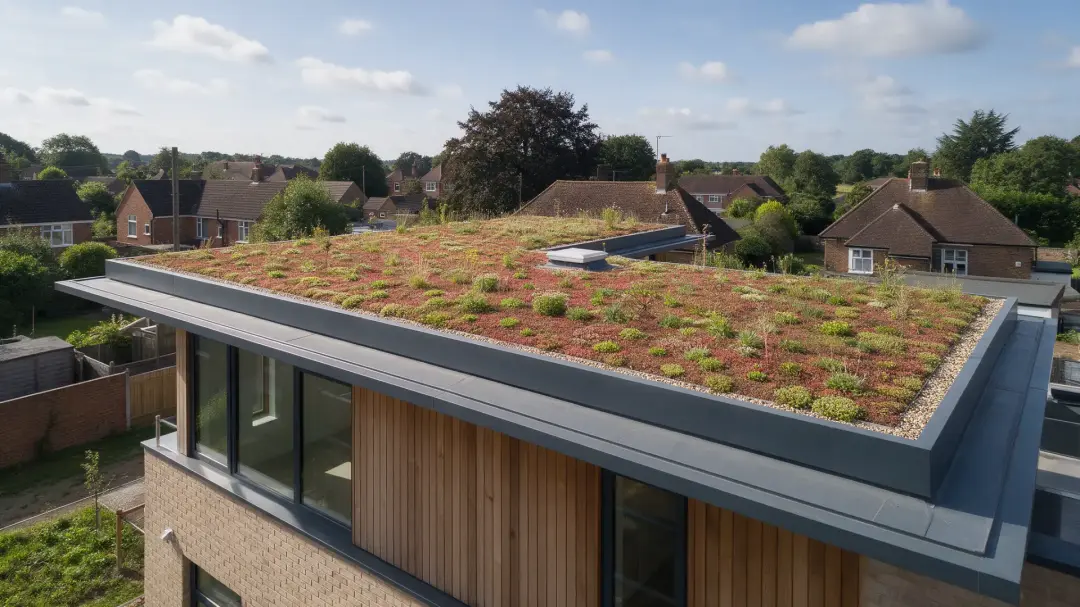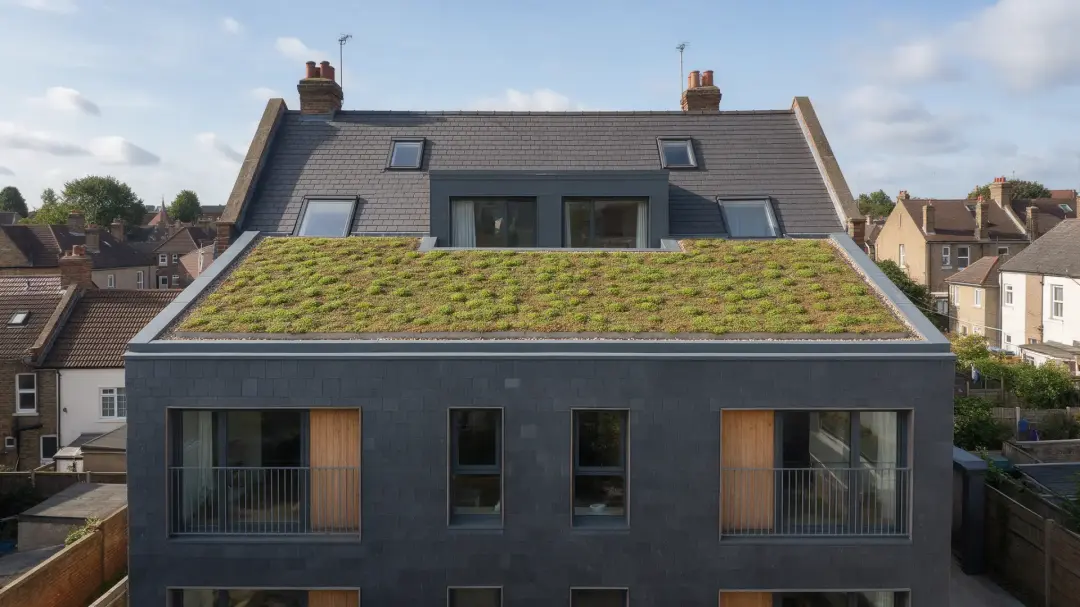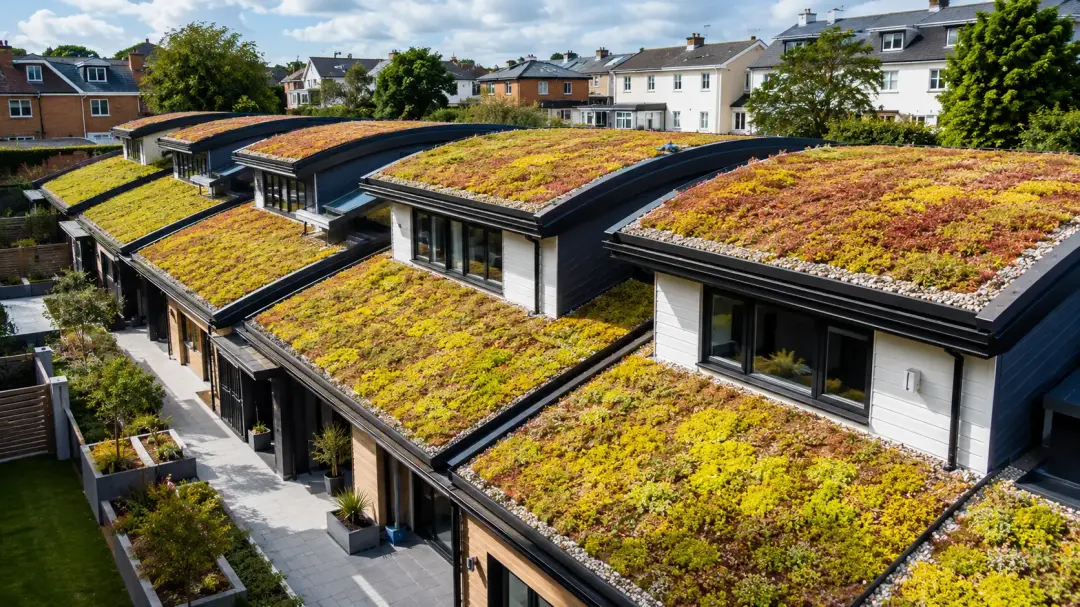
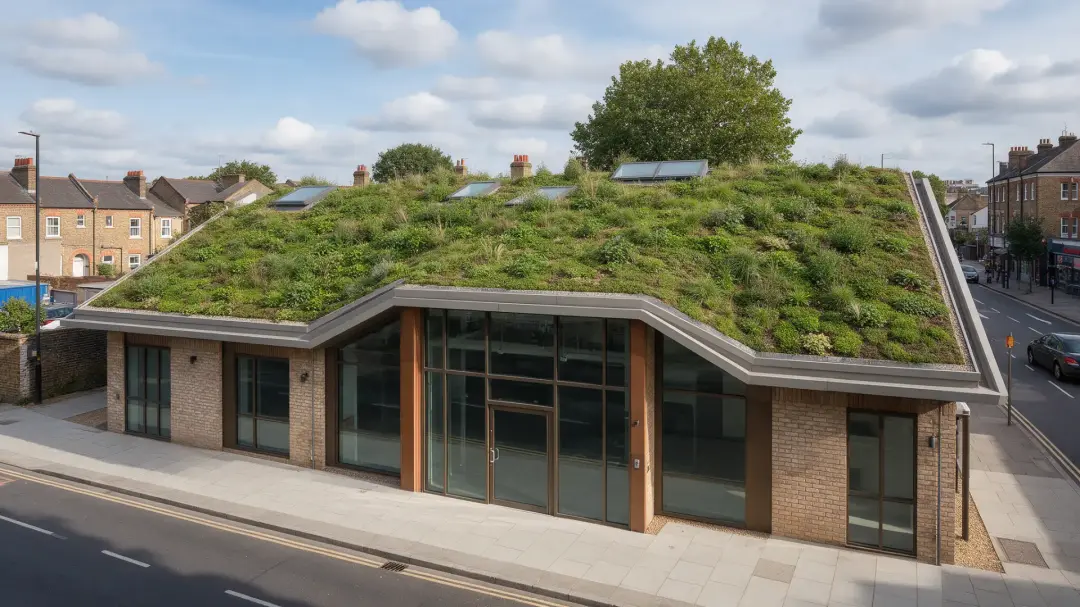
A planted roof can add green space where ground area is limited. Its benefits may include slower rainwater runoff, habitat for wildlife and protection for the roof membrane. The outcome depends on the building, planting and maintenance plan, so it helps to look at the evidence as well as the appearance before choosing a system.
Less Rainwater Reaching Drains at Once
Growing medium and drainage layers hold some rainfall. Plants use part of that water, while some evaporates back into the air. The remaining water reaches outlets more slowly than it would on many bare roofs. This can help manage runoff from a building, particularly when a green roof is considered alongside the site's other drainage measures.
A 2025 study of 30 Swedish green roofs found that they retained more than 50% of 409 mm of cumulative precipitation across 84 events during snow-free periods. That result is specific to those roofs and their weather. Retention generally drops when the substrate is already wet or a storm exceeds its storage capacity. Outlets and conventional drainage are still essential.
More Space for Plants and Wildlife
A roof with suitable flowering plants can offer food and shelter for insects in a built-up area. A mix of species, varied substrate depths and nearby gardens may make the habitat more useful than a uniform surface. Which wildlife actually uses it will depend on roof height, exposure, location and the planting that survives over time.
Habitat design involves choices. The most species-rich treatment in the 2025 rainfall study was not the one with the strongest stormwater result. A roof designed for pollinators may use a different plant mix from one designed principally to hold rain. It is better to specify the intended outcomes clearly than assume every green roof provides them equally.
A Cooler Roof Surface in Summer
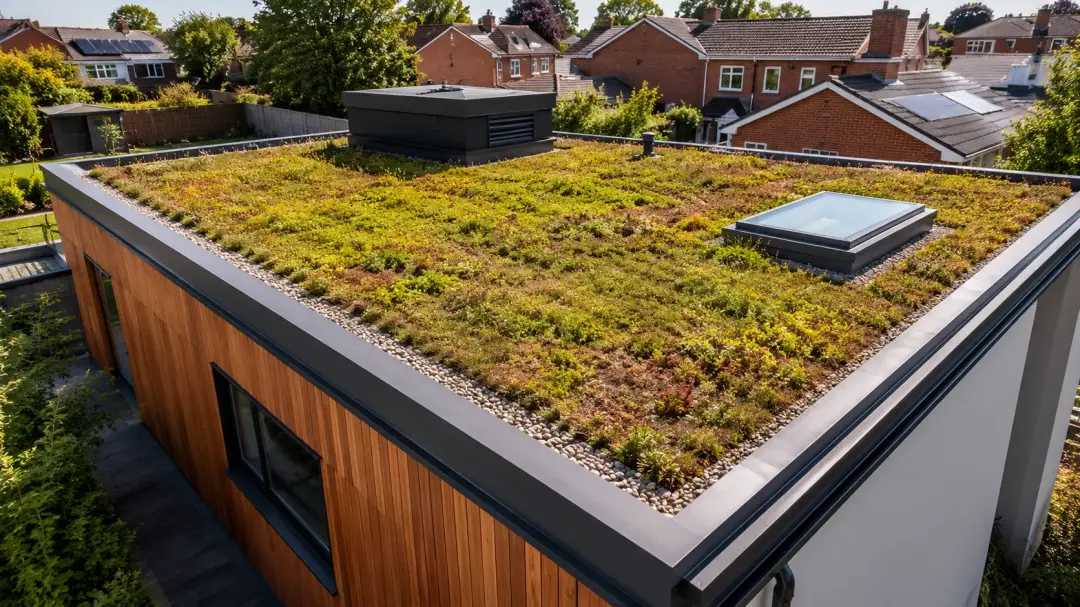
Vegetation shades the layers beneath it. Where water is available, evaporation can also remove heat. Together, these processes can moderate the surface temperature of a roof on warm days. The effect is likely to change during a dry spell, when the plants have less water to evaporate.
Indoor comfort and energy use depend on more than the planted layer. Insulation, building layout, ventilation and weather all matter. A roof over an already well-insulated room may affect indoor temperature differently from one above an uninsulated space. Treat cooling as a potential benefit to assess in the building's full design, not a fixed saving on every bill.
Protection for the Waterproof Membrane
Plants and growing medium cover the waterproofing, shielding it from direct sunlight and some temperature swings. This can reduce exposure that contributes to wear. The benefit depends on sound installation, suitable root protection and careful treatment of joints, upstands and outlets. Planting will not correct a poorly sealed membrane.
A US General Services Administration analysis used an average life expectancy of 40 years for a green roof and 17 years for a black roof. Those older US figures are planning estimates, not UK warranties. They illustrate why owners should compare the whole life of a roof, including maintenance and possible replacement, rather than looking only at installation cost.
Greenery Without Losing Garden Space
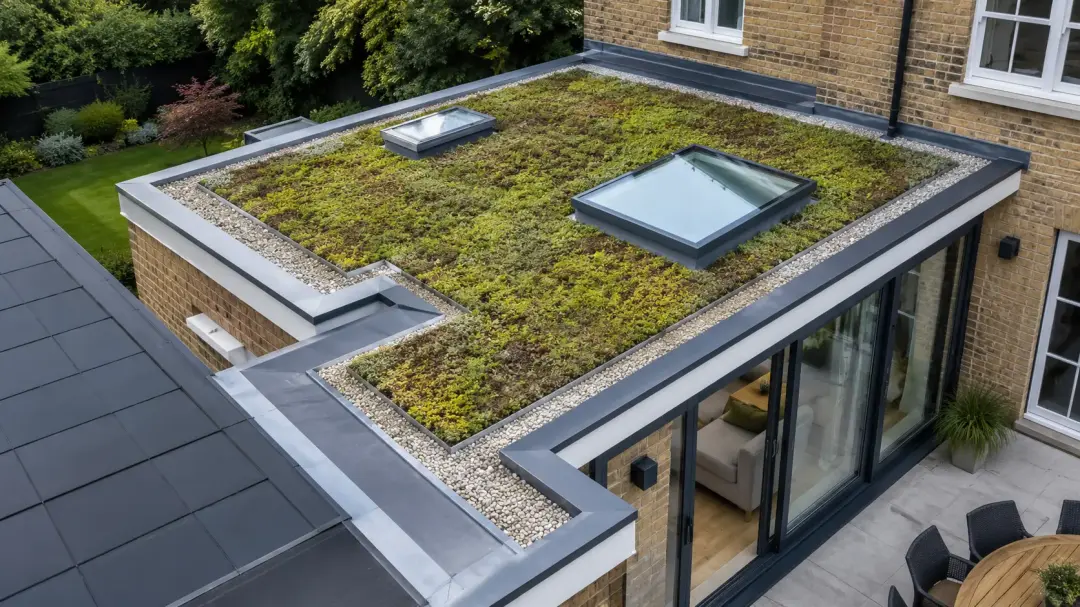
A living roof can turn the view from an upper window into planted space without occupying a patio or lawn. It may soften the appearance of a house extension, garage or commercial building. The visual result changes with season, planting and upkeep, so a realistic scheme should show how the roof will look after establishment and through winter.
An intensive roof can become an accessible garden, but that requires more than deeper soil. The structure, guardrails, access routes, irrigation and maintenance must be designed for people as well as plants. For many homes, an extensive roof viewed from above is a simpler option because it is not intended for everyday use.
Benefits Can Continue as a Roof Ages
A 2024 long-term field study analysed seven years of records from a 12-year-old green roof in a moist subtropical climate. It reported an average 82% retention across rainfall events and no obvious decline in retention during the monitored period. The figure cannot be applied directly to a UK roof, but it shows that a functioning system can continue to manage rain after its first few years.
Its performance still depends on clear outlets, healthy plants and sound waterproofing. An owner's inspection records make it easier to see whether those conditions are being maintained. The most useful measure is whether the roof continues to meet the goals set for that particular building.
Costs and Constraints to Weigh Up
A green roof usually costs more to install and maintain than an ordinary exposed roof. Fully saturated substrate adds weight, and some existing structures will need strengthening or may be unsuitable. Waterproofing, root protection, drainage, edge details and safe maintenance access all need to be included in a quote. A failing roof may need a new membrane before any planting is added.
Ask for the whole-life plan, including establishment watering, inspections and later plant care. The Green Roof Organisation's current UK guidance is a useful reference for those discussions. It advises maintenance by qualified people and notes that irrigation is commonly needed for the first 6–8 weeks, depending on rainfall. The cheapest initial quote may not cover the full work the roof needs.
Which Benefit Matters Most to Your Building?
A small house extension may prioritise appearance and modest habitat. A larger commercial roof might place more weight on surface-water management or views from neighbouring offices. A school or accessible building could want a usable outdoor space, but that changes structural and safety requirements. One system should not be assumed to suit every purpose.
Begin with a survey of the roof and its load capacity. Then discuss planting, drainage, waterproofing and maintenance together. Ask how the proposed design will be assessed after installation: clear outlets, healthy cover and a watertight building are practical measures. That gives you a realistic picture of the benefits available to your property.
If you are comparing green roof options in Croydon or Streatham, Excellent Building & Roofing can help you discuss the roof's condition, suitable planting and waterproofing. Visit our green roof installation companies service page, then get in touch about your property.